

 Travelog - Cyprus
 Travelog New Zealand
 Writers / Traveloggers
 Explore URPs worldwide
Drones identify ‘1 per km’ ghost nets along NT coastline
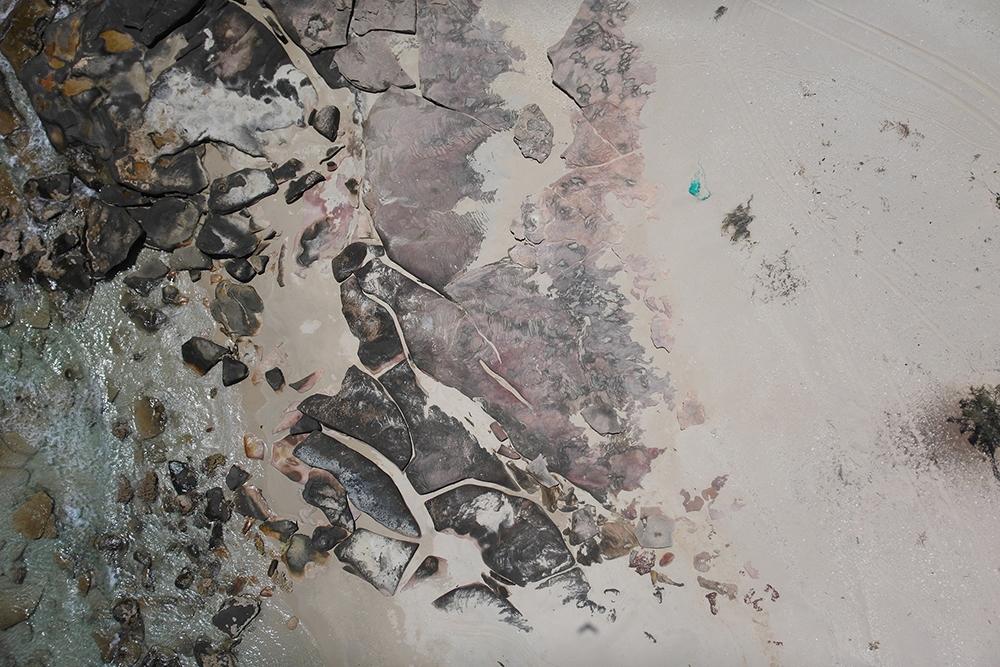
DRONES and artificial intelligence (AI) are uncovering ghost nets from 50cm to larger than 5m along the coastline of the Gulf of Carpentaria, in a program designed to protect the pristine environment of this region.
The project, led by Charles Darwin University’s (CDU) North Australia Centre for Autonomous Systems (NACAS) in partnership with the Anindilyakwa Land and Sea Rangers, began surveys last year with the goal of mapping the distribution of ghost nets washing ashore in the Anindilyakwa Indigenous Protected Area (IPA), which covers nearly 1000km of Northern Territory coastline.
To date, 83.74km of remote coastline has been surveyed, detecting 72 nets of varying size and condition.
Ranger manager Kirsten Eden said helicopter surveys were traditionally used to monitor ghost nets, but this approach was expensive and often restricted by the wet season.
“With CDU, we’ve successfully used drones to map the most affected beaches within the IPA, enabling more efficient planning, targeted net removal, and improved marine debris assessments using up-to-date data,” Ms Eden said.
The project is funded by a Ghost Nets Innovative Solutions Grant, provided by the Australian Government through Parks Australia.
To support on-ground response efforts, the Rangers also use a purpose-built vessel, Jarrangwa — funded through the same initiative — to access remote locations for net retrieval.
The detected ghost nets ranged from small 50cm fragments to large intact nets over 5m long, with some partially buried and barely visible from the ground. Several of these buried nets were described as being “like icebergs” — much larger beneath the surface—requiring a winch to extract them or a team of three to five people to dig them out and load them onto the vessel. CDU PhD candidate Aliesha Hvala said, “Drones offer a user-controlled aerial monitoring solution, particularly suited to northern Australia, where survey efforts are often limited by accessibility and seasonality,” Ms Hvala said.
Anindilyakwa Land and Sea Rangers aquatic biosecurity officer, Benjamin McArdle affirmed how useful drone and AI technologies have been to detecting ghost nets.
“High-resolution images combined with precise GPS coordinates of ghost nets has greatly improved the efficiency of trip planning,” Mr McArdle said. “It allows the team to map out routes and identify suitable beach access points before leaving the boat ramp.”
#ends
- Hits: 201